How a Boulder basement finish permit moves through the city
Basement finish permits go to Planning & Development Services, and applications are filed through the city's Customer Self-Service Portal. Since August 1, 2025, residential work has been reviewed under the 2024 International Residential Code with Boulder's local amendments. We submit the set described in our permit phase.
Where Boulder's energy code changes the scope
Boulder's energy code, the CoBECC, took effect December 1, 2024, and it sorts remodels by alteration level. Framing new rooms in an unfinished basement reconfigures space, which the code defines as a Level 2 alteration, and Level 2 work can show compliance with a prescriptive checklist. Once the work area exceeds half the building area, the project becomes Level 3, and the city wants either an ERI report showing a score of 50 or lower or two ERI reports comparing the house before and after. On a one-story ranch with a full basement, finishing the whole lower level and remodeling upstairs at the same time can cross that line.
Three Boulder overlays we check before design
Each can reshape a plan, and all three can be checked from an address.
Historic districts
Boulder has ten historic districts, Mapleton Hill and Chautauqua among them. Any exterior change to a property in a district needs a Landmark Alteration Certificate, newer buildings included, and adding or changing windows is on the city's list of common alterations. A new egress window and well count. The city has approved basement window wells in Mapleton Hill before, so plan for the review.
The 100-year floodplain
New residential basements are not allowed in Boulder's 100-year floodplain, and a building with any part inside it needs a Floodplain Development Permit before improvements. If the cost of work passes 50 percent of the structure's assessed value, the house must meet current flood rules, which for a residence means elevation two feet above base flood elevation.
Accessory dwelling units
ADUs are allowed by right on lots with a detached house in most zoning districts, and in 2025 the city dropped its owner-occupancy and parking requirements to match state law. A basement apartment is an attached ADU with its own review, so we settle early whether the lower level is a guest suite for family or a separate dwelling.
Boulder houses and the swelling clay beneath them
Mapleton Hill and Whittier are among the city's oldest neighborhoods, but much of Boulder came after the war. The city's postwar housing survey dates Martin Acres to 1954 through 1962 and Table Mesa to 1963 through 1967, the latter on hilly ground at the foot of Table Mesa. The same survey notes that basements dropped out of the earliest postwar subdivisions in favor of slabs and came back later, and that bi-level and split-level houses arrived in the mid to late 1950s. A Boulder lower level might be a full basement, the half-buried floor of a bi-level or nothing at all.
Under much of the city sits the Pierre Shale. A University of Colorado summary traces most swelling in Boulder County to thin bentonite beds within it, tilted steeply along the Front Range, so strips of very different swell potential can run under a single lot. Boulder gets about 19.4 inches of precipitation a year, concentrated in April, May and June, and soil moisture swings with it. Partitions here hang from the framing above with a gap at the slab, as our Colorado notes explain. Radon matters too: Boulder County Public Health says one in two homes in the county has high radon levels, so we ask for a test before framing.
What Boulder families put in a finished basement
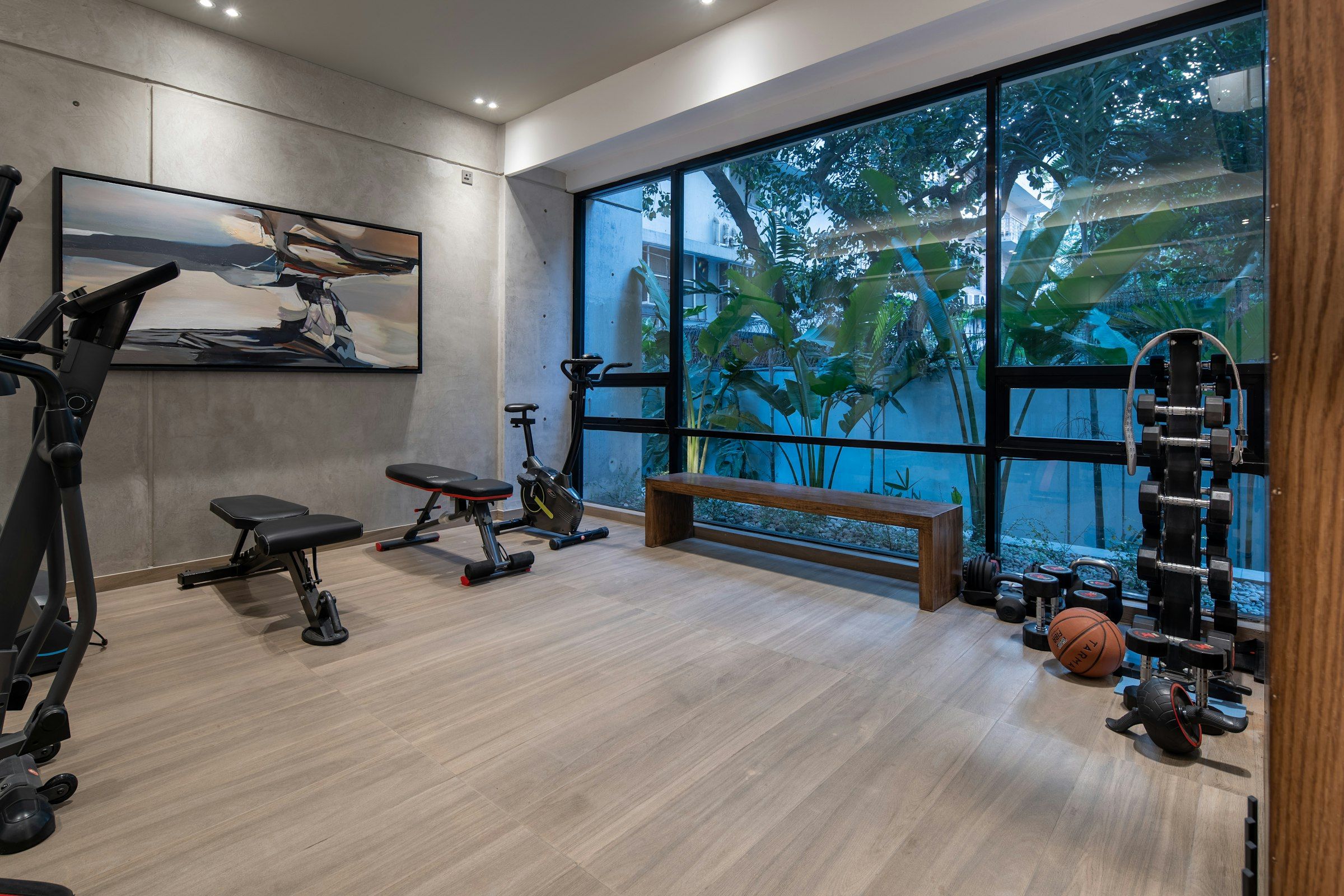
Finishing below grade adds living space without changing the footprint, which in Boulder sidesteps several of the reviews above. A home office paired with a gym suits a bi-level, where the lower floor sits partly above grade and can take larger windows. A guest suite with a legal egress window is the room most likely to need outside work, which is where the overlay checks matter. A home theater under a busy kitchen needs a ceiling built to keep sound downstairs. Our office and gym concept study shows one way to split a lower level between quiet and loud.
Before your first Boulder site visit
Send the address first. With it we can check the historic district map, the flood map and the zoning district before we arrive. The visit itself measures ceiling height to the lowest duct, finds the sewer exit and the panel, and looks for any sign of water. Owners comparing nearby towns can read about finishing a basement in Longmont or Broomfield. When you are ready, tell us about your Boulder basement.
Basement finishing questions from Boulder homeowners
Do I need a permit to finish a basement in Boulder?
Yes. New walls, circuits, plumbing and ductwork all fall under a building permit from Planning & Development Services, filed through the Customer Self-Service Portal. Surface finish work such as paint, flooring and cabinets generally does not need one on its own.
Does the Boulder energy code apply to a basement finish?
It does. Finishing an unfinished basement reconfigures space, which makes it a Level 2 alteration under the 2024 CoBECC, and Level 2 projects can use the prescriptive checklist. If the work area exceeds 50 percent of the building area, the project becomes Level 3 and needs ERI documentation.
Can I add an egress window to a house in a Boulder historic district?
Yes, with a Landmark Alteration Certificate, since a larger opening and a new well change the exterior. Window and door changes typically go to the Landmarks Design Review Committee. We plan the opening on a side or rear wall where we can and build that review into the schedule.
Can I finish a basement in Boulder's 100-year floodplain?
New residential basements are not permitted there, and improvements to an existing structure in the floodplain need a Floodplain Development Permit. If costs pass 50 percent of the structure's assessed value, the house must meet current flood rules, including elevation two feet above base flood elevation. We check the city flood map before design starts.
More answers on permits, egress, radon and flooring are on our basement finishing questions page.